
Quick Links
Governments Adopt Landmark Protections and Actions Across Marine, Freshwater, and Terrestrial Species

Governments Move to Halt Global Shark Declines with Landmark Protections
New CMS listings offer full protection for thresher sharks, scalloped and great hammerheads, and encourage better regional coordination for the Patagonian narrownose smoothhound as populations plummet worldwide
Act Now.jpg)
Global Protections Secured for Giant Otter and Striped Hyena
CMS parties adopt Appendix I and II listings for the two wide-ranging species, strengthening international cooperation across freshwater and terrestrial ecosystems.
Act Now
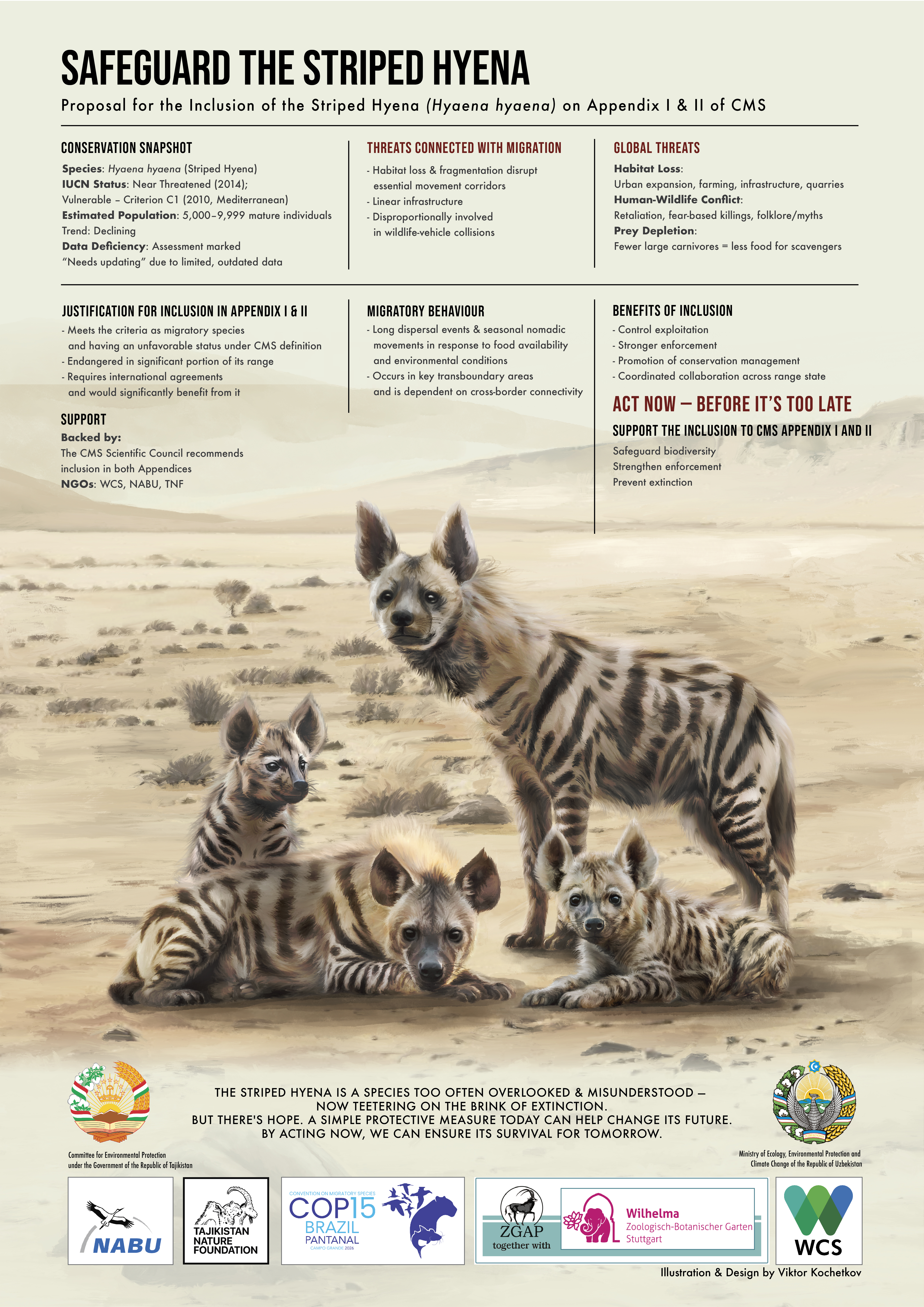
WCS Urges Global Action to Protect Striped Hyena as Populations Decline
WCS is urging Parties to support the proposal to include the striped hyena on both Appendix I and Appendix II of CMS.
Act Now. Credit_ Omar Torrico ©️WCS copy.jpg)
WCS Backs Urgent Protections for Giant Otter at Wildlife Summit in Brazil
“Listing the giant otter on both Appendix I and Appendix II of CMS will send a clear signal that urgent, coordinated international action is needed to conserve this species and the freshwater ecosystems it depends on,” said WCS's Susan Lieberman.
Act Now
WCS Urges Urgent Action to Halt the Accelerating Decline of Migratory Species Worldwide
CMS Party governments have a critical opportunity at this meeting to act decisively, using the best available science, to halt and reverse these trends.
Act NowWCS’s Role at CMS COP15
This Month in Brazil, Renewed Hope for the World’s Migratory Species
Ahead of CMS CoP15, WCS Wild Audio spoke to CMS Executive Secretary Amy Fraenkel about the state of the world’s migratory species — and what’s at stake at this year’s conference.
Reporting: Nat Moss
Guest: Amy Fraenkel



To Save Migratory Species, Conservation Must Cross Borders
Sign Up for Email Updates
Get news from the field and learn about ways you can help Earth’s most threatened species.