Fishing Communities
- Fishing Communities Photo
- WCS introduces conservation methods to manage fisheries in the Mozambique Channel in Madagascar.
- Julie Larsen Maher © WCS
- Andavadoaka, Madagascar Slideshow
- In the Andavadoaka region of Madagascar’s southwest coast, the Vezo people have subsisted on the bounty of the Toliar Barrier Reef for centuries. But the lobsters, finfish, octopus, and coastal dolphins they depend on are growing scarce. WCS conservationists are working to establish marine fishery reserves to ensure this fragile seascape and the traditional livelihoods it supports remain intact.
- Julie Larsen Maher©WCS
- Pirogue fishing boat Photo
- In the waters just south of the Mozambique Channel that borders much of Madagascar’s west coast, traditional Vezo fishermen ply their trade from simple hand-carved wooden canoes, called "pirogues."
- Julie Larsen Maher©WCS
- Fishing in Mozambique Channel Photo
- A fisherman swims a nets around a school of fish. Small-mesh fishing nets like this one can result in high levels of bycatch. WCS is working to promote more sustainable fishing gear.
- Julie Larsen Maher©WCS
- Toliar Barrier Reef Fish and Coral Photo
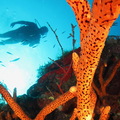
- Most of the fishing activity takes place within the nearest reaches of one of the world’s largest barrier reef systems, the Toliar Barrier Reef, since the pirogues cannot travel far. These reefs are among the most biodiverse in the Western Indian Ocean.
- ©Caleb McClennen/WCS
- Vezo fishing boy with catch Photo
- A boy watches over the village catch as it dries in the sun. Overfishing in the region has devastated fish populations, with serious consequences for the reef systems and for the Vezo tribe.
- Julie Larsen Maher©WCS
- Starfish in Toliar Barrier Reef Photo
- In addition to overfishing and destructive fishing practices, land pollution and the harmful effects of climate change can also have serious consequences for fragile coral reef ecosystems.
- ©Caleb McClennen/WCS
- Ben Mahafalay Madagascar Marine Photo
- WCS conservationist Bemahafaly Randriamanantsoa (center) monitors fishing activity to ensure catches meet size requirements. WCS has been helping the reef’s depleted fish stocks recover by establishing marine reserves that are subject to temporary closures.
- Julie Larsen Maher©WCS
- Shark finning Photo
- In addition to fishing, the Vezo people also hunt coastal dolphins and sharks in local waters. A growing global market for shark fins is depleting shark populations around the world.
- Julie Larsen Maher©WCS
- Madagascar Photo
- Though the Vezo people have had very limited economic opportunities, tourists are beginning to visit new resorts in the area. WCS is working to ensure the tourism industry grows sustainably and with respect for this spectacular seascape.
- Julie Larsen Maher©WCS
Coastal waters, rivers, coral reefs, lagoons, and inlets maintain ecosystems and provide habitat for fish, invertebrates, marine mammals, corals, and plants. They also feed and create revenue for many local communities. Despite the existence of longstanding traditions to sustain local fisheries, there are many sites in which modern fishing practices, overfishing, environmental degradation, and development are imposing unprecedented pressure on the ecosystems. These pressures threaten the biological functions these aquatic systems perform, the wildlife they support, and the communities they nourish.
In fishing villages from the Pacific to the Caribbean, WCS field staff are working to engage local communities in conservation initiatives, management plans, and ecotourism planning. They train local people to collect data, survey land and sea sites, patrol beaches, and enforce the laws and traditions that help sustain marine resources. Our conservationists pinpoint environmental threats, establish marine protected areas, raise awareness, support education programs through local universities, and advise on national and local policies, such as the rezoning of Indonesia's Karimunjawa National Park.
From the Newsroom
With support from the Summit Foundation, WCS conservationists and their local and international partners have introduced a new system of managed access to the Glover's Reef Marine Reserve’s conch fishery.
When local fishers in Kia Island opened a protected coral reef to fishing for a short-term community fundraising effort, the effects of the harvest bore long-term consequences for the reef's health.
A newly released study finds that people are increasingly consuming marine mammals—including some very rare species, like the Fraser’s dolphin—in more than 100 countries around the world.
A WCS marine project to reduce bycatch in Kenya and Curacao through a low-cost, low-tech fish trap design takes the top honor in a contest sponsored by Rare, in partnership with National Geographic.
Researchers find that fishery closures in Belize’s Glover’s Reef help barracudas, groupers, and other predatory fish recover while the parrotfish and other herbivores essential for reef recovery still need more protection.
As global leaders convene in Durban, South Africa to tackle climate change, WCS coral reef fisheries expert Dr. Tim McClanahan and his colleague Dr. Joshua Cinner urge action on behalf of the world’s fishing communities dependent upon the increasingly threatened bounty of warming tropical seas.
A new study identifies a better way to determine if coral ecosystems are in danger of collapse.
WCS conservationists help Belize develop a management program to restore the health of both fisheries and the coral reef ecosystems at its Glover’s Reef and Port Honduras Marine Reserves.
An archaeological study by a WCS marine researcher in Kenya compares fish
communities from modern times with those from the Middle Ages. The scientist finds that
the modern fish are overwhelmingly smaller, lower on the food chain, and
shorter-lived.
A long-term WCS study off the Kenyan coast finds overfishing in coral ecosystems can stunt the growth of reefs.
A 12-year study off the coast of
Kenya deconstructs old notions of how fishery closures affect local economies. Hint: They help them.
A new study says that banning certain types of fishing gear can help save coral reefs from the damaging effects of climate change, by protecting key fish populations that help stressed reefs recover.
WCS applauds the launching of the Coral Triangle Initiative at a summit in Indonesia. The leaders of six nations will work together to save this marine biodiversity jewel.
WCS researchers find that coral reefs next to middle class communities in East Africa have far fewer fish than the reefs in either poor or affluent communities.