
Elephants
Today, the world's largest land mammal is in crisis. All three types—Asian, African forest, and African savannah—are listed as threatened on the IUCN Red List. WCS has the strategies and programs in place to help them reclaim their former range.


Challenges
Illegal hunting and habitat loss are having a big impact on elephants. Between 2002 and 2013, the Central African forest elephant population dropped 65% and its range shrank 30%. Some populations of savannah elephants have also suffered major losses: in Tanzania and Mozambique, recent surveys show their numbers have dropped by 60% and 40%, respectively, in the past five years.
10 percent
Both African forest elephants and Asian elephants occur on only about 10 percent of their historical range.
Why WCS?
21 countries
WCS works on elephants in 21 countries, including nine in Asia and 12 in Africa.
28 percent
Our programs cover 28% of the African forest elephant population, 14% of the African savannah elephant population, and 40% of the Asian elephant population.
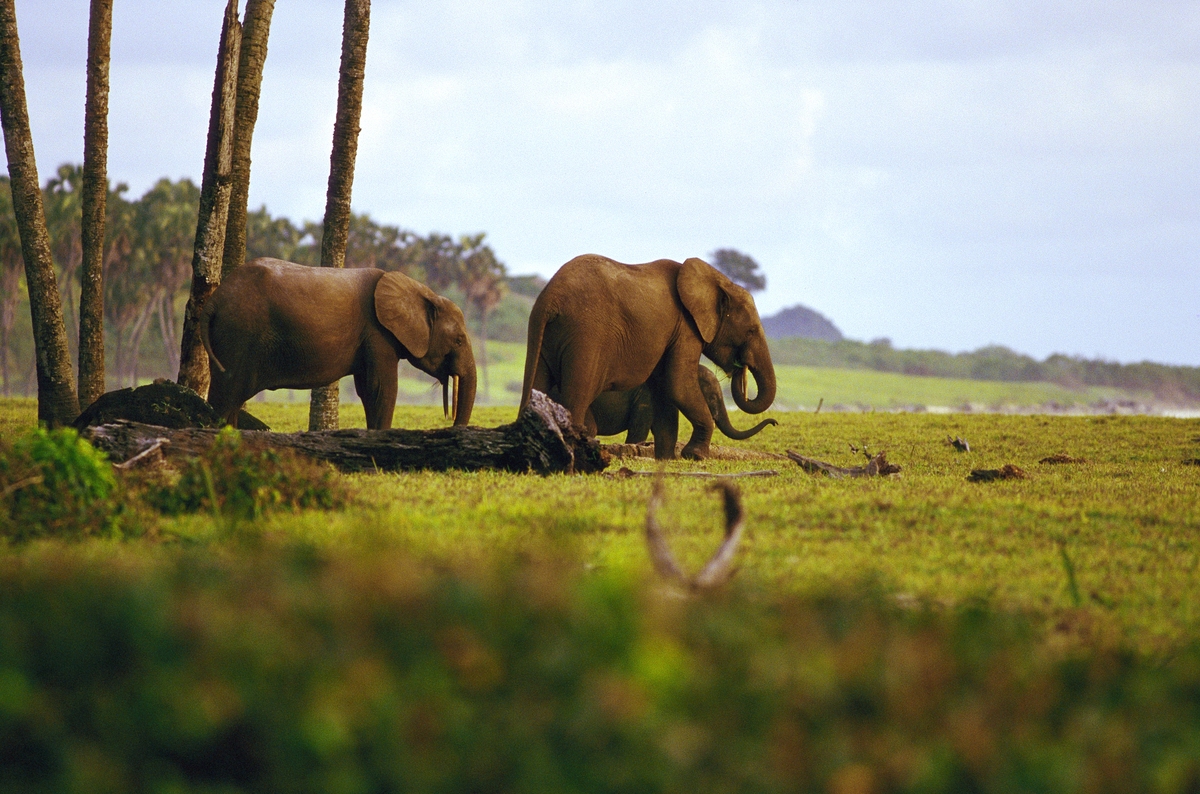
Conkouati-Douli National Park
Management of the park in Congo is a public-private collaboration between the Congolese government, local communities, WCS, and private donors. In 2014, WCS President and CEO Cristian Samper wrote on the Huffington Post of its success, as it was reported elephant numbers had risen by as much as 50% over four years.
Protect Elephant Habitat
In India, for instance, in 2011–12, WCS staff were highly instrumental in the expansion of four protected areas in the Western Ghats region by a total of 1,250 square kilometers. At the time, the region was home to roughly 5,000 Asian elephants.
In Burma, following surveys by WCS and the Forest Department, the Burmese Government designated a 4,000 square kilometer area of the Hukaung Valley in northern Myanmar as a wildlife sanctuary. We then worked with the Forest Department to identify key areas for elephants within the reserve.

"Devastating Decline of Forest Elephants in Central Africa"
In March 2013, the journal PLOS ONE published a ground-breaking study led by WCS scientists. The paper analyzed the largest survey dataset on the species ever assembled (representing over 90,000 person-days of fieldwork) and painted an alarming picture. In just a decade, the forest elephant in Central Africa had lost 62% of its population (at the rate of 9% annually) and 30% of its geographical range.

96 Elephants
To build support for elephant conservation and help stop ivory trafficking in the U.S., in 2013 WCS launched the 96 Elephants campaign. Since then, hundreds of thousands of supporters have pledged not to buy or sell ivory and to support a ban on commercial sales of ivory. In 2016, a federal ivory ban went into effect—a complement to the bans passed in key states like Hawaii, California, New York, and New Jersey.
PALF
Project for the Application of Law for Fauna (PALF) is a multi-partner venture, including WCS, that works to stop wildlife trafficking in the Republic of Congo. PALF investigates promising leads, coordinates arrests, and follows and supports legal proceedings, minimizing opportunities for corruption and helping ensure deterrent sentences are handed down.
Related News
-
January 31, 2024
Nouabalé-Ndoki National Park Celebrates 30 Years, as 2023 Marked First Year Without Any Elephant Poaching Detected
Read the story
-
January 13, 2022
Passive Fencing Keeps Thailand’s Elephants Out of Harm’s Way
A passive fence that guides elephants away from agricultural fields adjacent to Thailand’s largest national park has sharply reduced crop-raiding incidents, said conservationists from the Wildlife Conservation Society (WCS).
Read the story
-
December 16, 2021
WCS Welcomes EU Steps on Further Restricting its Domestic Ivory Market
The following statement was issued by WCS Vice President of International Policy Dr. Susan Lieberman in response to the European Union’s new ivory trade rules announced today.
Read the story
View All News
Nouabalé-Ndoki National Park Celebrates 30 Years, as 2023 Marked First Year Without Any Elephant Poaching Detected
Read the storyPassive Fencing Keeps Thailand’s Elephants Out of Harm’s Way
A passive fence that guides elephants away from agricultural fields adjacent to Thailand’s largest national park has sharply reduced crop-raiding incidents, said conservationists from the Wildlife Conservation Society (WCS).
Read the storyWCS Welcomes EU Steps on Further Restricting its Domestic Ivory Market
The following statement was issued by WCS Vice President of International Policy Dr. Susan Lieberman in response to the European Union’s new ivory trade rules announced today.
Read the storySign Up for Email Updates
Get news from the field and learn about ways you can help Earth’s most threatened species.